
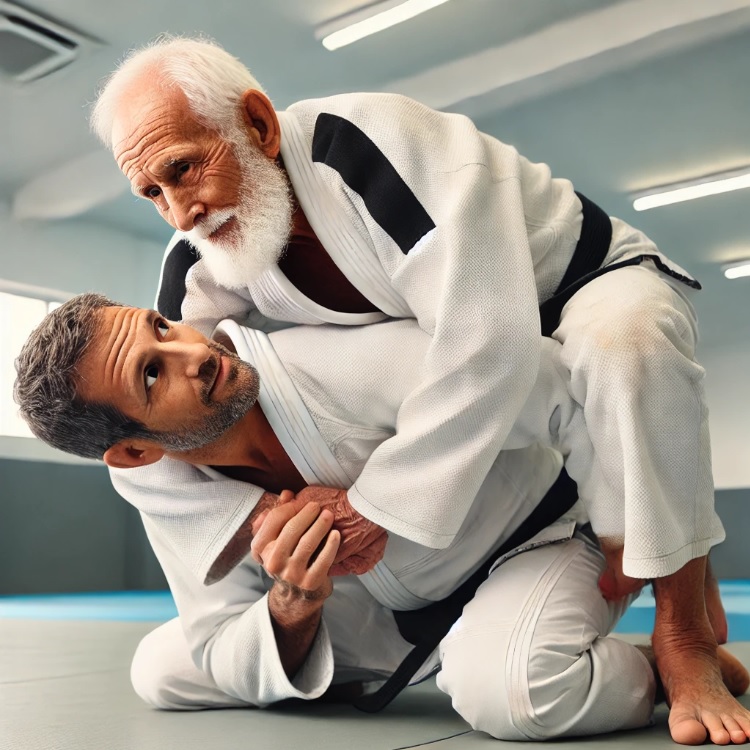
Aging is a bit like rolling with the gym’s resident 20-year-old blue belt: you might come out on top, but only after a battle that leaves you questioning your life choices. The passage of time can be unkind to joints, reflexes, and the ability to escape mount. But here’s the good news: training Brazilian Jiu-Jitsu (BJJ) as you age can help you dodge more than just armbars. It’s your ticket to a healthier, longer life. Don’t believe me? Let’s dive into some science…and a bit of self-deprecating humour.
Science Says: Keep Moving, or Else
There’s no shortage of research telling us that exercise is essential for staying alive and kicking. A study published in The Lancet Public Health (2018) found that regular physical activity reduces the risk of mortality, even in those starting later in life. Think of it like upgrading from a gasping white belt to a sneaky purple belt—it’s never too late to improve.
Exercise improves cardiovascular health, strengthens bones, and maintains muscle mass. And if you’re thinking, “But I’m too old for burpees,” relax. We’re not talking about punishing yourself with CrossFit WODs. Moderate exercise, like BJJ or even walking, delivers immense benefits. The trick is consistency.
Still not convinced? Consider this: NASA found that astronauts—those lucky humans floating in zero gravity—experience muscle atrophy and bone loss due to the lack of physical activity. Think about it: if you don’t move, your body begins to unravel faster than a cheap gi after a lapel choke session.
Astronauts vs. Aging Grapplers: Exercise Matters
NASA’s astronauts spend 2.5 hours a day exercising while on the International Space Station. Their routine includes:
- Cardio: Running on a treadmill with a harness (to simulate gravity)
- Resistance Training: Using specialised machines to counteract muscle loss
- Stretching: To maintain flexibility
Compare that to the average 70-year-old, whose weekly exercise might involve carrying groceries from the car and stretching to reach the remote. Houston, we have a problem.
For the aging grappler, this should be a wake-up call. If astronauts—who don’t even have gravity pulling them down—can keep fit, you can too. Swap resistance machines for shrimping drills, and cardio for rounds of sparring. If that doesn’t sound fun, remember: it’s better than zero-gravity osteoporosis.
Why BJJ is Perfect for Old(er) Folks
Brazilian Jiu-Jitsu might seem like an odd choice for the ageing body, especially when most practitioners think “gentle art” is an ironic nickname. But hear me out:
1. Low-Impact Movements
Rolling, shrimping, and flowing through techniques are kinder to your joints than running marathons or chasing grandchildren (the latter being the unofficial cardio of retirees).
2. Mental Stimulation
Ever try to escape a well-applied side control? It’s like Sudoku for your body. The problem-solving aspect of BJJ keeps your brain sharp—and research from Frontiers in Aging Neuroscience (2017) suggests that activities engaging both mind and body slow cognitive decline. Translation: Jiu-Jitsu might save you from accidentally putting your slippers in the fridge.
3. Community and Longevity
Training builds camaraderie. The gym becomes a second family—the kind that chokes you but also cheers you on. Studies from the Journal of Aging and Health (2016) show that social connections reduce mortality risk. And let’s be honest, nothing bonds people quite like collectively complaining about burpees.
Tips for Rolling into Old Age
Now that we’ve established that you should keep training, let’s look at how to do it without waking up the next day feeling like you went 12 rounds with Father Time.
1. Tap Early, Tap Often
No one’s handing out medals for gutting out a wrist lock in open mat. Protect your body. Your training partners will respect you for it, and your joints will thank you.
2. Prioritise Recovery
Remember, you’re not 25 anymore. Incorporate active recovery, stretching, and yoga into your routine. Take a page from Tom Brady’s book and foam roll like it’s an Olympic sport.
3. Embrace Technique Over Strength
This isn’t the time to outmuscle that 90kg purple belt. Refine your technique. Rely on leverage, timing, and trickery—also known as the Holy Trinity of Old Man Jiu-Jitsu.
4. Modify Your Game
Butterfly guard might save your knees. Half guard is a great resting spot. Avoid positions that make you feel like your hip replacement is imminent.
5. Stay Consistent
It’s better to train two days a week for years than five days a week for six months before burning out. Consistency beats intensity every time.
6. Diet and Hydration
Let’s not sugar-coat it: you can’t eat like a teenager anymore. Focus on anti-inflammatory foods, plenty of protein, and staying hydrated. Coffee doesn’t count—I checked.
The Bigger Picture
Exercise is crucial for staying independent and healthy in old age. According to research from Nature Reviews Endocrinology (2020), maintaining muscle mass and cardiovascular health prevents falls, fractures, and chronic disease. So, while BJJ might occasionally leave you sore, the alternative is far worse: weakness, loneliness, and a sedentary lifestyle.
Astronauts understand this. Their strict exercise regimen ensures they return to Earth without collapsing like a noodle. Similarly, your commitment to training ensures you can navigate life’s challenges—and maybe even beat the occasional blue belt.
Final Thoughts
Ageing isn’t a reason to stop training; it’s the reason you should train. Whether you’re orbiting the Earth or grappling in a gym, movement is life. Brazilian Jiu-Jitsu provides the perfect balance of physical exertion, mental stimulation, and community support to keep you thriving in your golden years.
So, keep rolling. Keep laughing. And when your knees complain, remind them that astronauts don’t even have gravity and still manage to work out. What’s your excuse?
Google your local BJJ class, check out the reviews – take the bad ones with a pinch of salt – and let’s face it, after all that “research”, the closest club will probably win anyway!!!



 OUTLIVE PERSONAL TRAINING
Leave a comment