
Always Learning: The Power of Kaizen and Continuous Improvement in Fitness, Martial Arts and Life
As a personal trainer and martial artist, I’ve come to appreciate the philosophy of continuous improvement, or “Kaizen”. Originating in Japan, Kaizen is a practice of constantly seeking incremental improvements in all areas of life—whether in business, personal growth, or physical performance. This philosophy is particularly relevant in the fitness and martial arts worlds, where mastery is never fully achieved, and there is always room to grow.
In both realms, there’s a need for adaptability, resilience, and the mindset that today’s limits can become tomorrow’s strengths. Whether you’re trying to lose weight, gain muscle, improve your endurance, or refine your martial arts techniques, the principles of Kaizen can be an invaluable guide on your journey.

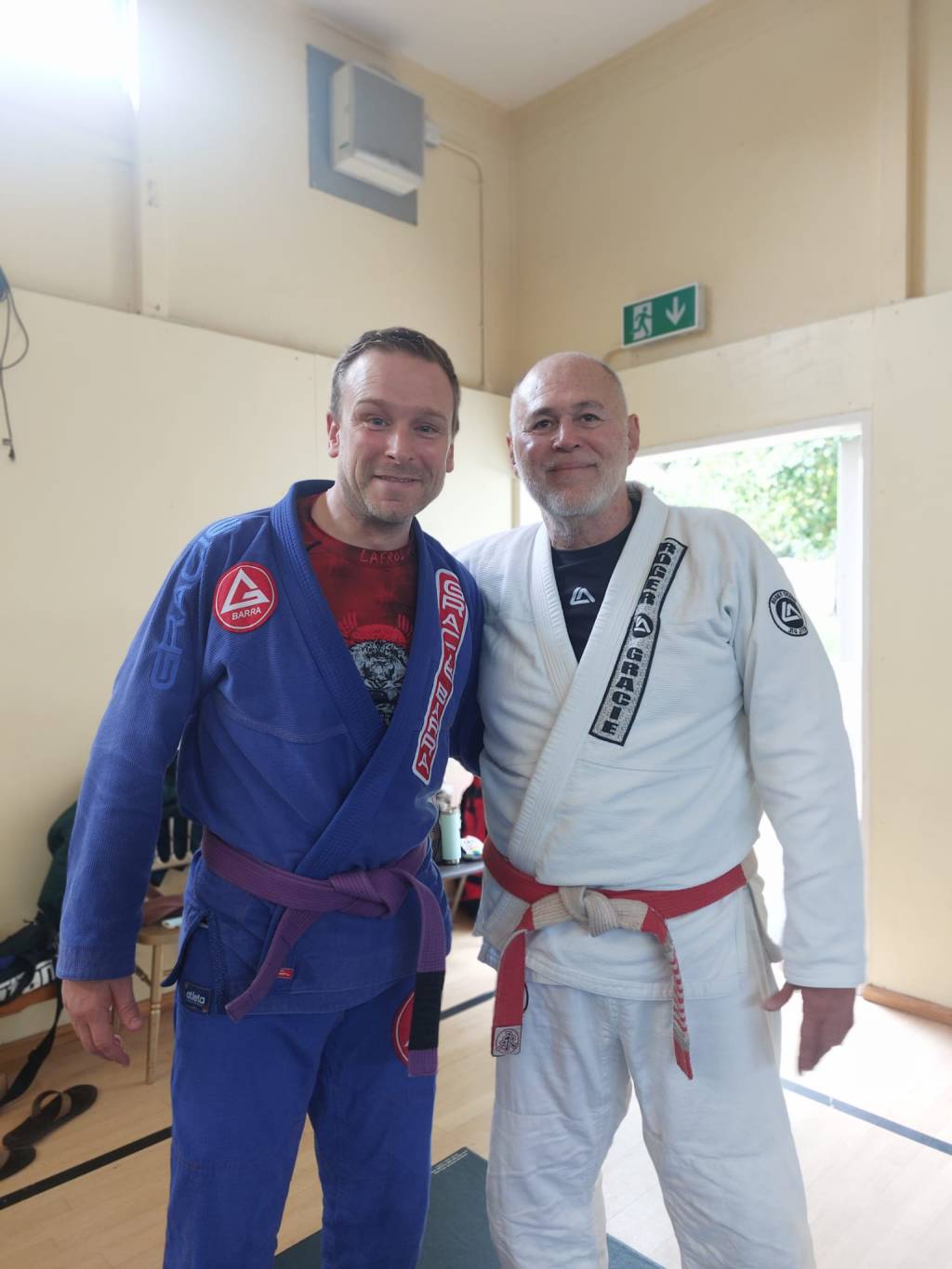
Photo above: Mauricio Gomes – living legend, embodies this philosophy of Kaizen and in his own words at Sunday’s seminar stated, “We never stop learning.” Reassuring to hear from someone with his degree of mastery!
1. The Foundation of Kaizen: Small Steps, Big Results
In the world of fitness, progress is often measured in small increments. You don’t go from lifting 50 kg to lifting 100 kg overnight. Similarly, martial arts mastery isn’t achieved in a week, month, or even years. It’s a lifelong commitment.
Kaizen teaches us that small, consistent improvements can lead to monumental changes over time. By breaking down your larger goals into smaller, more manageable tasks, you create a pathway for continuous growth. Whether it’s adding 5 kg to your deadlift every few weeks or spending an extra 10 minutes refining a technique on the mats, these minor tweaks compound over time.
For example, when I coach clients in strength training, I encourage them to focus not on massive, immediate gains but on consistent progress. Adding just a little more weight each session or perfecting a movement pattern translates into long-term strength gains. The same applies to martial arts. Learning a new move or drilling a specific technique is an incremental process, where mastery comes from repetition and refinement, not from giant leaps.
2. Learning as a Lifelong Journey
Both in fitness and martial arts, one of the most important principles is understanding that learning never stops. The minute you think you’ve “made it” is the moment you stop improving.
As a personal trainer, I constantly update my knowledge on the latest research, techniques, and training methodologies. The fitness industry is always evolving, and it’s essential to stay up to date. Being complacent not only limits your potential but also the potential of those you train.
Martial arts are no different. As a martial artist, you’re forever a student, regardless of rank or skill level. There is always a new technique to learn, a new skill to hone, or a deeper understanding of the art form to gain. Continuous learning ensures that you don’t stagnate but instead keep moving forward on your journey.
The beauty of continuous learning in martial arts is that each lesson reveals just how much more there is to learn. Whether it’s discovering a new approach to an old technique or training with someone of a different style, every session can offer something new. This mirrors the approach in fitness, where even after mastering certain movements, there are always new variations, methods, or programming strategies to explore.
3. Embracing Failure as Part of the Process
A crucial part of Kaizen is accepting failure as part of the process. In both fitness and martial arts, failure is inevitable. Whether it’s not hitting a personal best in the gym or getting submitted during sparring, failure offers valuable lessons.
As a personal trainer, I’ve seen countless clients become frustrated when they don’t achieve their goals as quickly as they expected. What many fail to realise is that setbacks are an opportunity to reassess, re-evaluate, and come back stronger. When I encounter challenges with a client—whether they’ve plateaued in weight loss or struggle with a specific exercise—I emphasise that these are just part of the journey. It’s through this lens of Kaizen that we reframe obstacles not as failures but as temporary setbacks with lessons to learn.
In martial arts, defeat on the mats can be humbling. Whether it’s being outclassed by a higher belt or failing to apply a technique in a live situation, every failure teaches you something. Kaizen helps us to view each setback as a stepping stone toward growth. It’s a reminder that mastery is a process, and each defeat brings us one step closer to improvement. In Brazilian Jiu Jitsu there is the expression, “We win, or we learn.” Not a bad philosophy to live by.
4. The Importance of Adaptability
One of the core lessons I’ve learned in both personal training and martial arts is the need for adaptability. No two clients are the same, and no two training sessions unfold in the same way. The human body is complex, and every individual responds differently to various stimuli. What works for one person may not work for another, and what worked for you last year may not work today.
Kaizen encourages a mindset of adaptability. In fitness, this means tailoring workouts to meet individual needs. Whether someone is dealing with an injury, a mental block, or simply not progressing as expected, you have to be willing to adapt. By making small adjustments, you keep progressing and avoid stagnation.
In martial arts, adaptability is equally important. Every opponent is different, and no fight or sparring session follows a predictable script. You have to be prepared to adjust your tactics, think on your feet, and respond to the unexpected. Continuous improvement in martial arts often comes from adapting techniques in real time, taking what works, and leaving behind what doesn’t.
5. The Role of Discipline and Consistency
Kaizen isn’t just about improving when it’s convenient or easy. It’s about showing up consistently, even when you don’t feel like it. Both fitness and martial arts demand discipline. There will be days when you don’t want to train, when the weights feel heavier than usual, or when you simply aren’t in the mood to spar. But it’s on those days that the most growth happens.
As a trainer, I see this often. Clients who remain consistent, even through setbacks or lack of motivation, are the ones who see the greatest results. The same applies to martial arts. The practitioners who continue to train, even when progress feels slow, are the ones who eventually excel.
Kaizen teaches us that consistency is the key to long-term success. It’s the small, everyday efforts that add up over time, not the sporadic bursts of motivation.
Conclusion: A Journey of Continuous Growth
In both fitness and martial arts, there’s no finish line. You don’t reach a point where you can say, “I’m done, I’ve learned everything.” The process of continuous improvement is ongoing, and that’s what makes it so rewarding.
By embracing the philosophy of Kaizen—small, incremental improvements—you set yourself up for long-term success. Whether you’re a personal trainer helping others on their fitness journeys or a martial artist working to master your craft, the mindset of always learning and continuously improving will take you further than any quick fix or shortcut ever could.
In the end, the goal isn’t to reach perfection but to commit to the process of becoming better, day by day. The journey of self-improvement never ends, and that’s what makes it worth pursuing.



 OUTLIVE PERSONAL TRAINING
Leave a comment